NESCOD vs Conventional AC
May 11, 2026
Introduction
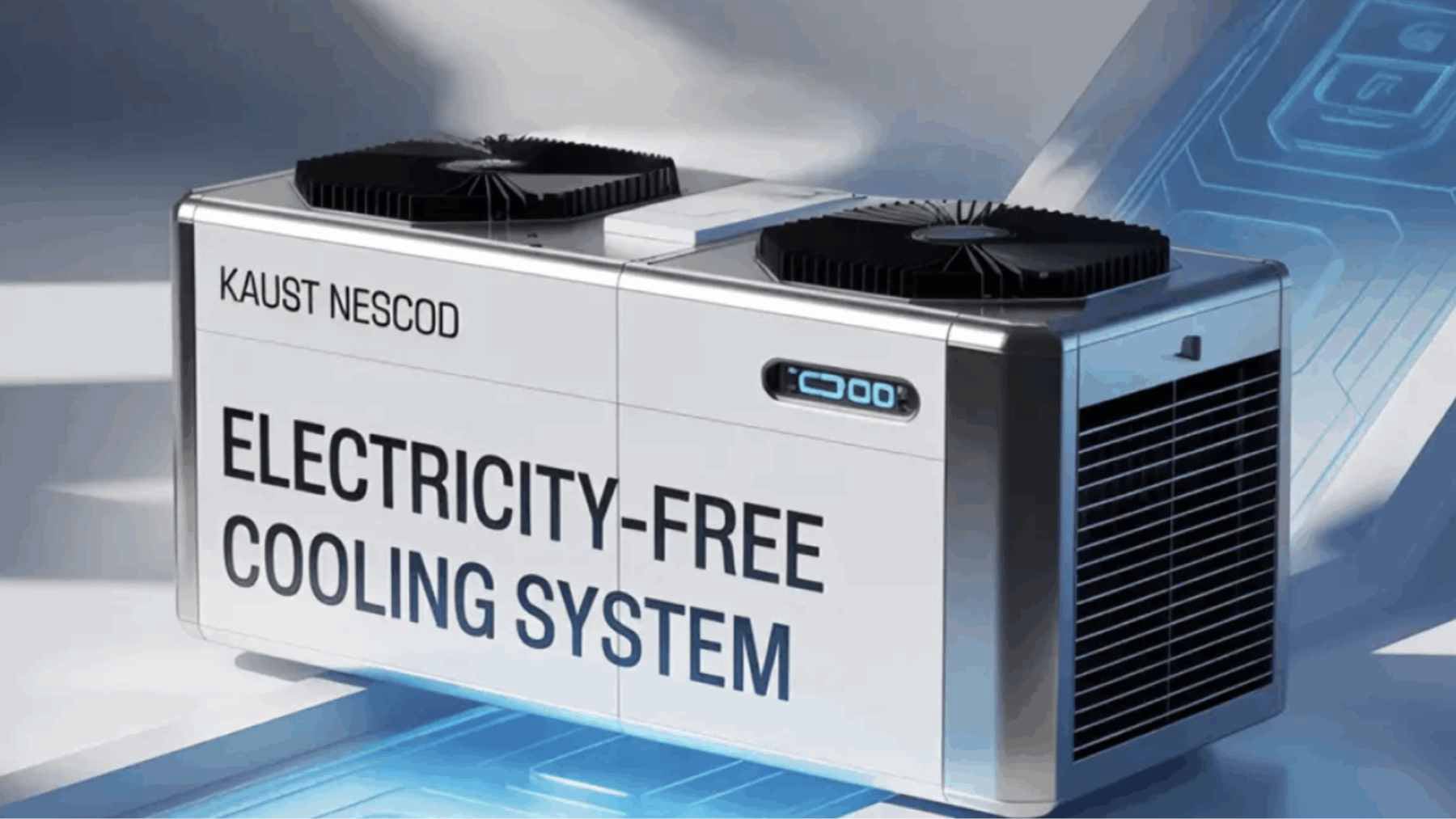
Air conditioning has been the go-to response to heat for many decades. With the increasing cost of electricity and the demand for more sustainable energy, researchers in Saudi Arabia began researching alternative options. Professor Peng Wang and others at KAUST’s Water Desalination and Reuse Center developed NESCOD technology. This technology does not use electricity; instead, it uses solar energy and a type of salt to cool. Compared to conventional AC, NESCOD has no moving parts, emits little to no emissions, and uses environmentally friendly materials (Team Global, 2026).
Previous Research
Research on multistage cooling systems using salts such as sodium chloride (NaCl) and calcium chloride (CaCl2), as well as seawater, laid the groundwork for NESCOD technology by demonstrating that cooling could be achieved through a salinity-driven process. Alberghini et al. (2020) developed a four-stage cooling system that combined membrane distillation, evaporation-condensation heat transfer, and osmotic vapor transport. The findings showed that certain salts could efficiently absorb and transfer heat. While Alberghini et al. focused on cooling via salt gradients and membrane transport processes, NESCOD builds on that concept by storing the energy in the salt and water solution and regenerating the salt crystals using solar regeneration.
NESCOD Technology
The system developed by Professor Wang was a two-stage thermodynamic cycle that included dissolution cooling and solar-driven solute regeneration. The cooling occurs when the salt, ammonium nitrate, dissolves in water, triggering an endothermic reaction that absorbs heat from the environment to break the salt's bonds and, in turn, lower the liquid’s temperature. The solar regenerator uses the sunlight to turn the water in the salt solution into vapor. After vaporization, the salt forms crystals again, essentially recharging the system for another cooling cycle. In the research done by Wang et al. in 2021, the water vapor produced was consistently around 2.2kgm2-hr. This rate kept the temperature between 5 and 15 degrees Celsius, an acceptable range for cooling. Due to the research being conducted in Saudi Arabia, the researchers made an extra effort to ensure the NESCOD technology would operate at extreme temperatures. They found that the system can be used with impurity levels below 1ppm (parts per million), making it useful in especially dry areas (TOI Science Desk, 2026). Although researchers focused on dry climates, the cooling mechanism is not humidity-dependent, suggesting that NESCOD technology could potentially be used anywhere.
In addition to its extensive use, the NESCOD was designed with cost-effective materials. The technology uses ammonium nitrate, a highly soluble salt that absorbs heat as it dissolves in water. It is a fairly common salt, used in fertilizers, making it easily accessible for NESCOD production. Water dissolves the ammonium nitrate, which is then evaporated to regenerate the salt crystals. The system also uses a spectrally selective absorber (SSA), which captures the solar energy, and a polyethylene (PE) film to prevent direct contact between the SSA and the salt solution (TOI Science Desk, 2026).
NESCOD vs Conventional AC
While NESCOD offers a more intriguing approach to cooling, its effectiveness can be directly compared with conventional air conditioners in areas such as emissions, materials, efficiency, and cost to determine its true value to society. The biggest difference between the two technologies is the overall cooling process. NESCOD technology uses endothermic salt dissolution to absorb heat and regenerate using solar energy, whereas air conditioners use vapor-compression refrigeration cycles that include many mechanical and electrical parts. This also means that NESCOD does not use any electricity or emit any emissions, since it gets its energy from the sun. Conventional air conditioners require energy to power fans, compressors, and other controls, and produce CO2 emissions from their refrigerants (Baugh, n.d.).
The design of both technologies also plays a huge role in the comparison. NESCOD only requires ammonium nitrate, water, solar regeneration components, and a storage vessel. Air conditioners require refrigerants and materials for their mechanical, thermal, and electrical components. Directly related to materials, maintenance costs vary significantly. A NESCOD may need salt and regeneration system management, while an air conditioner requires regular maintenance of all moving parts, including the air filter (Baugh, n.d.).
Based on this information, NESCOD seems like the perfect option for cooling; however, because the technology is still extremely new, its cooling capacity and reliability are somewhat low. NESCOD is designed solely for passive cooling, including off-grid applications and thermal energy storage, and its regeneration cycle relies on the availability of salt crystals. Air conditioning units can cool residential, commercial, and industrial buildings and are extremely reliable as long as there is electricity (Baugh, n.d.).
Conclusion
Overall, NESCOD technology offers a promising alternative to conventional air conditioning, requiring no electricity and having minimal environmental impact. Using previous research on salinity-driven cooling, NESCOD uses ammonium nitrate and solar-powered regeneration to create a sustainable cooling cycle. Compared to conventional air conditioners, NESCOD uses fewer materials, is cost-effective, and has no moving parts. While this is intriguing, because the technology is still relatively new, many considerations remain before it can be on par with conventional AC. Continued research on NESCOD technology could provide a practical, higher-scale solution to sustainable cooling in the future.
